
Friday, March 9, 2012

Too Little DHA May Shrink Your Brain


Higher intake of fish oil could slow brain aging, according to new research.
It’s normal for the human brain to get smaller with age. But too little of the omega-3 fatty acid docosahexaenoic acid (DHA) may shrink brains more quickly and cause thinking problems, research from the University of California, Los Angeles (UCLA) suggests.
This new cross-sectional study, published in the journalNeurology, has now found that lower levels of red-blood cell DHA levels are associated with smaller brain volumes, as well as vascular-related problems with learning and memory. Continue reading 

Thursday, March 8, 2012

Mentally stimulating group activities -- including such things as discussion groups, games, and gardening -- boost cognition in mild to moderate dementia, a Cochrane review determined. So not only do group activities help longevity, boost cognition, but valuable information can be shared. 


Wednesday, March 7, 2012

A sound sleep may be a solid defense against memory loss and Alzheimer's disease


 Alzheimer's disease presently ranks as the sixth leading cause of death in the US, as the number of new cases is projected to triple by the year 2050 and affect as many as sixteen million people. The result of a new study presented at the American Academy of Neurology's 64th Annual Meeting has found that the level and duration of quality sleep may later affect memory function and the risk of Alzheimer's disease in later life.

Researchers determined that poor quality sleep is associated with the build-up of neural tangles between synapses that is associated with the loss of ability to form new memories and progression of Alzheimer's dementia. Making time for seven to nine hours of uninterrupted sleep each night may be a crucial factor to Alzheimer's risk reduction as we age.


I have a bodymedia armband that tells me the quality of sleep and how many hours and times I wake up...I can really tell the difference the next day on how well I sleep the night before!

Tuesday, March 6, 2012

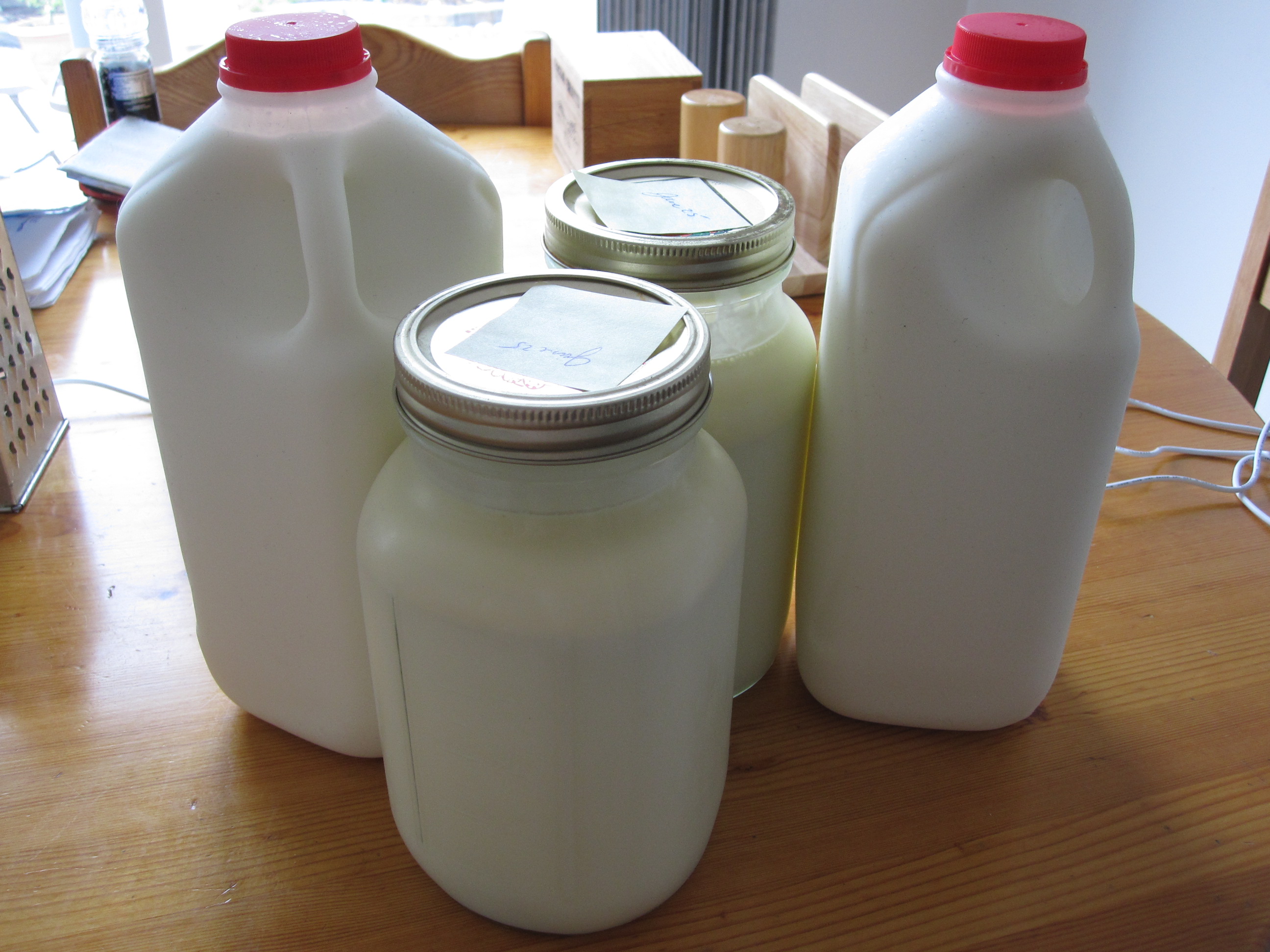
Profoundly Flawed Study Used as Basis for CDC’s New Report on Supposed “Dangers” of Raw Milk


After reading this you'll conclude, time to buy your own cow!

March 6, 2012

MilkTo hear the media tell it, our lives are in jeopardy if we drink unpasteurized milk. But the facts tell the opposite story.
A new study from the US Centers for Disease Control and Prevention (CDC) declares that raw milk “cannot be considered safe under any circumstances,” and essentially advocates for stricter laws and enforcement against raw milk on the state level. The study claims that the rate of outbreaks caused by unpasteurized milk and products made from it was 150 times greater than outbreaks linked to pasteurized milk. The authors of the study based this conclusion on an analysis of reports submitted to the CDC from 1993 to 2006.
However, according to the Weston A. Price Foundation, the CDC has manipulated and cherry-picked this data to make raw milk look dangerous—and it has dismissed the same dangers associated with pasteurized milk.
What the CDC data actually shows is that there are almost 24,000 foodborne illnesses reported each year on average. For the fourteen-year period that the authors examined, there was an average of 315 illnesses a year from all dairy products for which the pasteurization status was known. Of those, there was an average of 112 illnesses each year attributed to all raw dairy products and 203 associated with pasteurized dairy products.
In other words, pasteurized milk products cause nearly twice as many illnesses as raw milk products, but illnesses from dairy products still constitute only 1.3% of the total, with raw dairy products coming in at less than half of a single percentage point. All of this is minor compared to the health risks of taking prescription drugs or even entering a hospital.
Raw milk, despite what the media reports said with such hysteria this week, is simply not a high-risk product. And, as we pointed out last week, there has been not a single death from consuming raw milk in the 38 years the data has been collected—compared to over 80 deaths from pasteurized milk products during that same time period.
The time frame examined by the researchers dramatically skewed the results as well. The authors analyzed data from 1993 to 2006. Perhaps they chose that range because one year later, in 2007, 135 people became ill from pasteurized cheese contaminated with e. coli and three people died.
Nowhere do the researchers identify the specific reports they analyzed, so the veracity and quality of the reports, and how this might affect the results, are impossible to judge. In stark contrast, the CDC refuses to look at Vaccine Adverse Event Reporting data for the human papillomavirus vaccine (HPV) because the data is considered “lacking.” Clearly, the agency picks and chooses when it wishes to analyze complete data and when it does not.
Another factor that is completely neglected is the source of the milk. Most food contamination products originate in large factory farms or CAFOs. Many people would consider unpasteurized milk from a family farm safer than pasteurized milk from a CAFO, but of course the government does not want to alienate Big Farma by getting into such qualitative distinctions.
The CDC study also utterly neglects any analysis of the long-term health benefits of consuming raw milk versus pasteurized milk. The pasteurization process destroys delicate proteins, enzymes, immune factors, and vitamins, and inhibits mineral availability. As we noted last week, based on the latest research, the very healthiest milk would be raw, grass-fed, organic, and from a cow that is only milked for the first six months after giving birth. Of course, now that a judge has ruled against “cowshares” and called them a “subterfuge,” it appears that to get the healthiest possible milk (not milked all through pregnancy), you will have to own your own cow.
Wouldn’t it be wonderful if our government valued informed consumer choice instead of relying on misinformation to serve the interests of big food operations?
A new farm bill will be drafted soon. We hear that healthy milk, and not just raw milk but even healthier pasteurized products like organic milk, will be under attack in the bill. We’ll monitor the situation and keep everyone posted.

Monday, March 5, 2012

Tolerance of others

Each person is blind and doesn't see the entire picture of reality. Each of us is limited in what we see.

Sunday, March 4, 2012

Are There Toxins in Your Meat or Fish?


Some metabolism-wrecking toxins, such as processed foods, hydrogenated fats, and high-fructose corn syrup, are easy to avoid because they're listed on food labels. But others — polychlorinated biphenyls (PCBs) and dioxins, for example — aren't. These pollutants, by-products of manufacturing, found their way into our lakes and streams long ago, with the result that they've now entered our food supply through animal products.
Despite being outlawed for more than 30 years, PCBs have managed to stay in the food supply thanks to landfill leaks and other sources. They're often found in farm-raised salmon and many types of freshwater fish. A study found that women who regularly ate fish caught in Lake Ontario, which is known to have high levels of PCBs, had significantly more of the toxin in their breast milk than women who didn't eat fish from the lake. It's not just Lake Ontario, either — all across the United States, state health services periodically issue fish-consumption advisories because of PCBs. Long-term consumption of these chemicals may raise the risk of cancer and reproductive, immune system, and neurological problems.
Dioxins are a by-product of incineration and other industrial processes. Livestock absorb industrial pollution from incinerators, and dioxins build up in the animals' fatty tissues. So if you eat a high-fat diet, you are more likely to consume dioxins, which have been linked to cancer and developmental, endocrine, and immune system damage.
How can you avoid dioxins and PCBs? Always buy wild-caught salmon and pay attention to state fish-consumption advisories. Use the Natural Resources Defense Council's Sustainable Seafood Guideand the Monterey Bay Aquarium's Seafood Guide to find the safest types of seafood in your area. Always look for organic meats and dairy products, buy products with the lowest fat content possible, and remove visible fat and skin from meats. Start protecting yourself from these poisons now!

Thursday, March 1, 2012

Healthy fish facts


Rainbow Trout (farmed)

Though lake trout are high in contaminants, nearly all the trout you will find in the market is farmed rainbow trout. In the U.S., rainbow trout are farmed primarily in freshwater ponds and “raceways” where they are more protected from contaminants and fed a fishmeal diet that has been fine-tuned to conserve resources.Now that is a suprise, I love trout!
Salmon (wild-caught, Alaska)
To give you an idea of how well managed Alaska’ssalmon fishery is, consider this: biologists are posted at river mouths to count how many wild fish return to spawn. If the numbers begin to dwindle, the fishery is closed before it reaches its limits, as was done recently with some Chinook fisheries. This close monitoring, along with strict quotas and careful management of water quality, means Alaska’s wild-caught salmon are both healthier (they pack 1,210 mg of omega-3s per 3-ounce serving and carry few contaminants) and more sustainable than just about any other salmon fishery
Freshwater Coho Salmon (farmed in tank systems, from the U.S.)
Fresh water coho salmon is the first—and only—farmed salmon to get a Super Green rating. All other farmed salmon still falls on Monterey Bay Aquarium’sSeafood Watch “avoid” list for a few reasons. Many farms use crowded pens where salmon are easily infected with parasites, may be treated with antibiotics and can spread disease to wild fish (one reason Alaska has banned salmon farms). Also, it can take as much as three pounds of wild fish to raise one pound of salmon. Coho, however, are raised in closed freshwater pens and require less feed, so the environmental impacts are reduced. They’re also a healthy source of omega-3s—one 3-ounce serving delivers 1,025 milligrams.